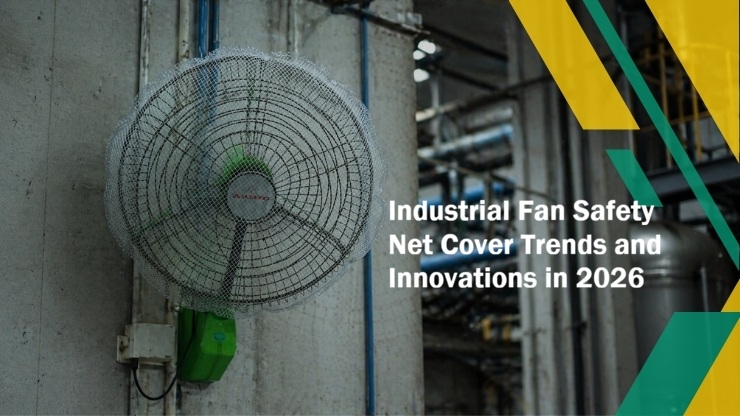
The industrial space is evolving rapidly. There have been developments such as expansion of warehouses, automation of factories, and increased performance of ventilation systems aimed at maintaining optimal temperatures. Apart from improved air flow, there has been an increasing demand for solutions in areas of safety of workers and protection of equipment.
This is one reason why the Industrial fan safety net cover has gained significance in 2026. It is not just perceived as a protective mesh covering the fan anymore. Rather, it has a role in enhancing safety, improving air flow, decreasing maintenance issues, and protecting the industrial ventilation system from damage.
Why Industrial fan safety net covers Matter More Today
The industrial fan is found in manufacturing plants, warehouses, workshops, manufacturing units, and logistic centers for regulating heat and enhancing air circulation. Most of the industrial fans are operated for long hours during the day.
If the fan blade is not protected properly, it can pose many dangers to people in the vicinity. There are possibilities that dust, loose plastic, packaging material, wires, and other particles may enter into the fan system.
The Industrial fan safety net cover ensures that the fan blade remains safe while allowing air circulation through it. The modern industry is giving high priority to worker safety issues compared to earlier times. Small measures like using safety equipment can go a long way in making workplaces safe.
Lightweight Mesh Covers Are Replacing Heavy Guards
The older metal shields were tough, but at the same time, they were heavy and hard to manipulate when carrying out repairs. Most industries today are shifting towards the use of lightweight mesh shields.
Modern Industrial fan safety net cover designs are commonly made using:
- PVC-coated mesh
- Stainless steel wire mesh
- Industrial safety netting
- Corrosion-resistant coated materials
- Heavy-duty synthetic mesh
Such materials can offer excellent shielding without increasing the weight of the fan assembly. Lightweight covers can be very helpful in big industrial buildings where maintenance staff frequently cleans and inspects the ventilation system.
Better Airflow Is a Bigger Priority in 2026
In the past, most organizations used to consider safety alone when deciding which fan cover to use. Nowadays, however, airflow efficiency is just as important.
When the cover hinders too much air flow, the fan motor will have to put in more effort to cool down. Consequently, power consumption goes up.
That is why modern designs of the Industrial fan safety net cover incorporate meshes that promote better air flow even as they shield workers from moving blades.
Good airflow helps:
- Maintain cooler work areas
- Improve ventilation performance
- Reduce motor strain
- Lower energy consumption
- Support better equipment cooling
This is especially important in warehouses and factories where industrial fans operate for long hours.
Flame-Resistant Covers Are Becoming More Common
The fire safety standards are getting stricter in all the industries. The presence of electric systems, machines that generate heat, and dusty environment makes most factories and warehouses prone to fires.
In order to enhance safety measures, many companies have embraced flame-resistant Industrial fan safety net cover products.
These covers are commonly used in:
- Manufacturing plants
- Electrical equipment rooms
- Chemical processing units
- Food production facilities
- Heavy industrial workshops
Using flame-resistant materials helps improve workplace safety in high-temperature environments.
Custom-Fit Covers Are in High Demand
Industrial ventilation fans vary widely in size. Some factories utilize wall mounted fans, whereas other factories use pedestal fans, exhaust fans or even HVLS fans.
For that reason, most companies are opting for Custom Fit Industrial fan safety net covers as opposed to standard size covers.
A custom-fit cover usually offers several benefits:
- Better safety coverage
- Cleaner installation
- Reduced vibration issues
- Improved airflow around the fan
- Better overall appearance
Custom covers are especially useful for oversized industrial fans and specialized ventilation systems.
Corrosion Resistance Is More Important Than Before
The industrial environment is not kind to metal equipment as well. Moisture, dust, and chemical reactions can cause gradual damage to conventional fan guards.
In order to increase their durability, the manufacturers are increasingly concentrating on rust-proof materials for Industrial fan safety net cover.
Stainless steel and coated mesh systems are widely used in:
- Food processing plants
- Pharmaceutical facilities
- Agricultural buildings
- Outdoor industrial areas
- Coastal environments
These materials last longer and reduce maintenance problems caused by rust and corrosion.
Easy Maintenance Is Influencing New Designs
Dust accumulates fast in industrial fans, especially in factories, warehouses, and packaging plants. It takes some time to clean clogged meshes in facilities that have big ventilation systems. That’s why current designs of Industrial fan safety net covers allow easy maintenance.
Many newer products include features like:
- Quick-release fittings
- Adjustable fastening systems
- Removable mesh panels
- Washable mesh materials
- Easy-install designs
These features make cleaning and inspections much faster for maintenance teams.
Noise Reduction Is Becoming a Focus
Industrial fans may produce considerable amounts of background noise particularly within enclosed manufacturing plants where the ventilation system is operated continuously.
Several recent designs of Industrial fan safety net cover are known to be able to reduce vibration and turbulence of air flow thus reducing noise.
A less noisy ventilation system will be more comfortable for workers especially in big factories where the industrial fans are used on a regular basis..
Sustainable Materials Are Becoming More Popular
Many industries are adopting measures to minimize wastage by using long-lasting products. This trend is also being adopted in industrial fan safety products.
Companies are now seeking Industrial fan safety net cover products that will last long without having to be replaced.
Manufacturers are responding with:
- UV-resistant materials
- Long-life mesh coatings
- Weather-resistant designs
- Reusable industrial netting
- Durable synthetic mesh systems
Long-lasting covers reduce replacement costs and support more sustainable industrial operations.
Workplace Safety Awareness Is Increasing
There have been a lot of efforts put into accident prevention in factories and warehouses as compared to before.
Exposed fan blades are now regarded as an easily avoidable safety hazard. The installation of a good quality Industrial fan safety net cover not only provides safety to the employees but also prevents any sort of debris from entering the fan system.
Fan cover inspection has become a regular feature at most facilities these days. This emphasis on prevention is one of the major reasons behind the increasing demand for industrial fan safety products.
Different Industries Need Different Fan Safety Solutions
Every industry has different ventilation requirements, which also affects the type of safety cover they need.
Warehouses and Logistics Centers
Large industrial fans help maintain airflow across storage and loading areas. Safety covers protect workers moving near ventilation equipment.
Manufacturing Plants
Factories often deal with heat, dust, and continuous machine operation. Durable fan covers help improve safety and ventilation reliability.
Food Processing Units
Food industries usually prefer easy-to-clean and corrosion-resistant fan safety covers to maintain hygiene standards.
Agricultural Buildings
Greenhouses, poultry farms, and dairy facilities often require moisture-resistant mesh covers because of humid conditions.
What Businesses Should Check Before Buying
Selecting the proper safety cover for your Industrial Fan is more than just safety. A good safety cover should also enhance airflow, lessen maintenance problems, and withstand harsh industrial environments without the need for replacement often.
Airflow Efficiency
The ideal mesh cover should provide adequate protection to employees without compromising air flow. A poorly designed safety cover could lower the efficiency of fans.
Strong and Reliable Material
A correctly fitting cover will remain steady during use, thus minimizing vibrations. Always measure your fan diameter and ensure proper mounting before purchasing.
Accurate Size and Secure Fit
A properly fitted cover stays stable during operation and helps prevent unnecessary vibration or movement. Before buying, check the fan diameter and mounting compatibility carefully.
Easy Cleaning and Maintenance
Dust accumulation may pose safety risks as well as hampering air flow. Covers that are easily accessible or can be removed for cleaning purposes are the most convenient.
Durability for Continuous Use
Industrial fans often run for long hours every day. Businesses should invest in safety covers designed for long-term performance to avoid frequent repairs or replacements.
Workplace Safety Compliance
Many industries follow strict workplace safety standards. Using a high-quality fan safety cover helps improve employee protection and supports safer working conditions across the facility.
Final Thoughts
The Industrial fan safety net cover has developed into an integral component of modern industrial safety and ventilation systems. In 2026, companies will require more than mere protection. They will require covers that enhance airflow, improve worker safety, decrease maintenance requirements, and increase durability in harsh conditions.
Materials that are lightweight, promote airflow through mesh design, are flame-retardant, and customizable will play a vital role in the future of industrial fan covers.
As industries become increasingly modernized, the demand for more advanced and durable fan safety covers is likely to increase even further. A good fan cover not only increases safety for employees, but also improves the performance of the entire ventilation system.