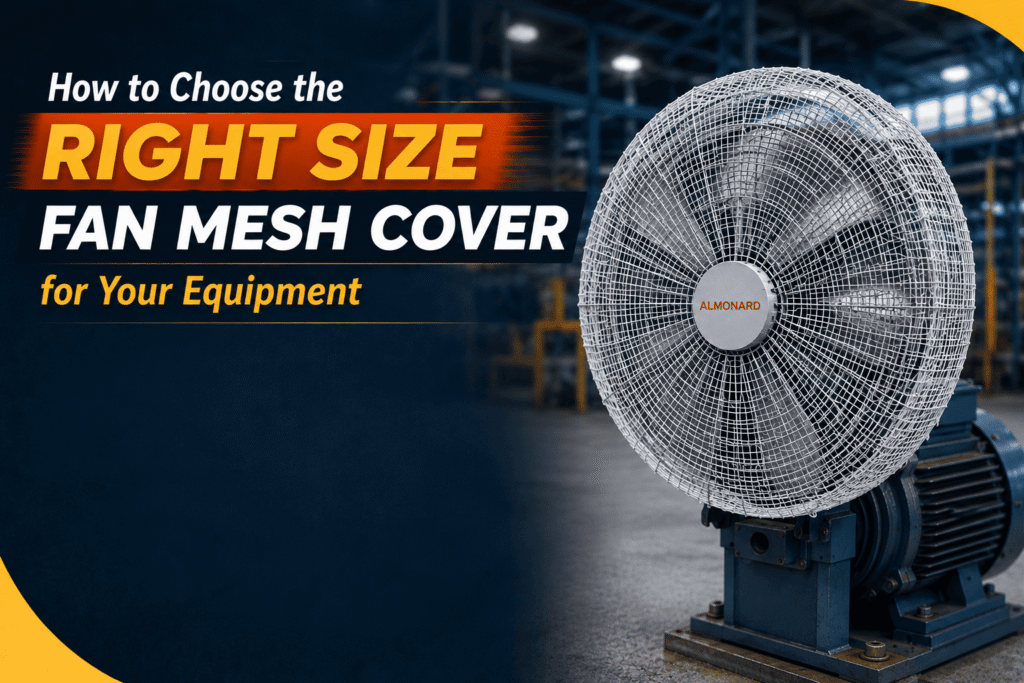
Fans for industrial purposes are utilized in various settings such as factories, warehouses, workshops, HVAC systems, manufacturing plants, and others to prevent machines from overheating. As industrial fans are usually fast moving, their safety becomes of major importance in the workplace. This is the reason why many companies opt for installing an industrial fan mesh cover in order to ensure security for workers as well as machinery.
The importance of choosing the correct cover size cannot be underestimated. An oversized cover may affect the machine operation because of vibrations; conversely, a cover, which is too small, may not perform its basic function due to gaps near the edge of the cover. It also makes sense to consider the airflow when selecting an appropriate cover size.
When you plan on replacing or installing a Fan Protection Cover, understanding the principles of sizing will come in handy.
Why the Correct Fan Mesh Cover Size Matters
The industrial fan mesh cover acts as a shield that prevents any physical contact while ensuring the proper circulation of air. The main challenges that occur when the industrial fan cover size is incorrect include increased energy consumption due to difficulty circulating the air since the cover is too tight and hence will require the fan motor to work extra hard.
On the other hand, when the cover is too big for the fan, then it means that it might not serve its purpose as it should because there could be other items like wire, tools, or even dust that might cause damage to the fan system.
What Is an Industrial Fan Mesh Cover?
Industrial fan mesh cover refers to a protection mesh that is fitted on industrial fans and ventilation units. The materials used to manufacture the industrial fan mesh cover include stainless steel, galvanized steel, and wire mesh.
Fan safety net cover serves as an effective barrier between the fan blades and direct contact while allowing airflow through the cover.
A Fan Protection Cover is commonly used on:
- Industrial exhaust fans
- Cooling fans
- HVAC systems
- Generator cooling units
- Warehouse ventilation fans
- Agricultural ventilation systems
- Heavy machinery cooling equipment
Different industries use different mesh styles depending on airflow requirements, dust exposure, and operating conditions.
How to Measure a Fan Properly
One of the biggest mistakes people make is measuring only the fan blades. To choose the correct Industrial fan mesh cover, you need to measure the complete fan assembly.
Measure the Full Diameter
Start from one outer edge of the fan housing and measure across to the opposite edge through the center. This gives you the actual cover size required.
For square fans, measure both width and height.
Check the Depth
Some industrial fans have large motors or extended blade sections. Measure how far the fan extends outward so the Fan Protection Cover does not come into contact with moving parts.
Leaving proper clearance is important because industrial fans can vibrate slightly during operation.
Look at Mounting Areas
Many Fan Safety Net Cover systems use screws, brackets, or clamps. Check the mounting points before selecting a size. If the mounting area does not align properly, installation may become difficult and unsafe.
How Mesh Size Affects Performance
The mesh opening size plays a major role in airflow and protection. Smaller mesh openings provide better protection against debris, while larger openings improve airflow.
Fine Mesh Covers
Fine mesh designs are useful in environments where dust or small particles are common. Food processing plants, electronics manufacturing units, and pharmaceutical facilities often use this type of Industrial fan mesh cover. A fine Fan safety net cover can help reduce contamination while still supporting airflow.
Medium Mesh Covers
Medium mesh is one of the most common options for industrial use. It offers a balanced combination of airflow and safety.
Many factories and warehouse ventilation systems use medium-sized Fan Protection Cover solutions because they work well in general conditions.
Wide Mesh Covers
In large industries where fans operate, the system may have wider spaces between meshes because they need maximum air flow.
Despite having larger gaps, the Industrial Fan Mesh Cover should still be an effective safety barrier from any accidental contact.
Why Airflow Should Never Be Ignored
Air flow is one of the most significant considerations when choosing a Fan Protection Cover. The design of industrial fans ensures that a particular amount of air is transferred. Excessive restrictions in the air flow will reduce its efficiency.
Excessive loads, high temperatures, and poor efficiency result from poor air flow. There are many things that affect the air flow performance:
Wire Thickness
Thicker wire provides stronger protection and durability. However, it can slightly reduce airflow compared to thinner mesh designs.
Open Area Percentage
The open area refers to how much empty space is available within the mesh. Higher open-area designs allow air to pass through more easily.
Material Selection
Various materials have varying impacts on durability and air flow capabilities. The stainless steel material is resistant to corrosion, while the galvanized steel is cheaper for regular industrial application purposes.
The best choice of Industrial fan mesh covers requires balancing protection and air flow capabilities.
Which Material Is Best?
The best material depends on the environment where the fan operates.
Stainless Steel Covers
Stainless steel is a popular choice for industrial applications exposed to moisture, chemicals, or outdoor conditions. A stainless steel Fan Safety Net Cover lasts longer in harsh environments and resists corrosion. These covers are commonly used in food plants, pharmaceutical units, and marine industries.
Galvanized Steel Covers
Galvanized steel provides strong durability with protective coating against rust. This type of Fan Protection Cover is widely used in factories, warehouses, and standard ventilation systems.
PVC-Coated Covers
PVC-coated mesh covers are useful in humid environments because the coating adds extra moisture resistance. Many agricultural ventilation systems use this style of Industrial fan mesh cover.
Common Mistakes to Avoid
Choosing the wrong Industrial fan mesh cover can create safety and performance issues. One common mistake is focusing only on fan blade size while ignoring the housing dimensions. This often leads to poor fitting.
The next problem involves choosing a mesh that is overly dense. Although having small apertures improves safety, they can reduce air flow if the structure becomes too restrictive. There are some people who even put indoor filters on outdoor units. The absence of weatherproof material will lead to corrosion problems.
Ease of maintenance is another consideration that most consumers tend to forget about. A Fan Safety Net Cover that can be easily removed for servicing is important.
Where Industrial Fan Mesh Covers Are Commonly Used
An Industrial fan mesh cover is used in many industries because rotating equipment needs protection in almost every industrial setting.
Manufacturing Facilities
Factories use Fan Protection Cover systems to reduce the risk of worker contact with moving blades.
Agricultural Buildings
Poultry farms, dairy facilities, and greenhouse ventilation systems often use corrosion-resistant Fan Safety Net Cover designs because of high moisture exposure.
Warehouses
Warehouses require industrial fans for ventilation purposes. The mesh cover is used to keep debris out of the fan systems.
Food Processing Plants
The food grade stainless steel Industrial fan mesh cover systems are usually preferred due to their ease of cleaning and sanitation resistance properties.
Should You Choose a Custom Fan Mesh Cover?
The standard sizing is effective for most purposes, but for some industrial systems, customized sizing may be required. In such cases, a custom-sized Industrial fan mesh cover might be required.
Custom covers are often used for:
- Oversized ventilation systems
- Heavy-duty industrial cooling fans
- High-temperature environments
- Specialized machinery
- Unique mounting structures
A properly fitted custom Fan protection Cover can improve both airflow and operational safety.
Maintenance Tips for Long-Term Performance
Even an industrial fan mesh cover of good quality requires maintenance. The dust and other particles accumulate on the mesh, affecting its efficiency. Regular cleaning of the cover is necessary to ensure efficient air circulation.
You need to check whether there is any bending of the mesh, rusting, loose nuts, and any interaction with the blades. In case the fan safety net cover gets damaged, replacement is necessary to avoid hazards.
Safety Standards and Compliance
Many industrial workplaces follow machine safety regulations that require proper guarding around rotating equipment.
A correctly installed Fan protection cover helps reduce injury risks and supports workplace safety compliance. Depending on the industry, additional safety checks and maintenance procedures may also be required.
Final Thoughts
The proper selection of an Industrial fan mesh cover does not solely depend on the size requirements alone. The ideal fan mesh cover must be able to provide a good fit, facilitate airflow, ensure protection, and withstand environmental factors.An efficient Fan safety net cover will aid in the protection of the worker, decrease issues related to maintenance, and maximize the performance of equipment in the long run. When selecting a Fan Protection Cover for your ventilation system, warehouse fan, or industrial cooling system, it makes a huge difference.